Colors
  Docs
Docs  Support


MANAGEMENT CONSULTANCY
Our mission is to support organizations in optimizing their performance and raising the return on money invested. By providing our clients with an impartial, objective, and industry-wide viewpoint, we assist them in expanding their perspectives and seeing new opportunities. Our exposure to and connections with a wide range of different organizations mean that we have a keen understanding of current trends, industry best practices, and the direction that the future is taking due to a multitude of factors, foremost among them being technology.
Our services include Business Agility Strategies, Process Analysis, Change Management, Business Performance Evaluation, Scoping of Organizational Capabilities and Resources, Strategy Development and Execution, and Process Analysis. Generally speaking, we offer each customer a variety of frameworks and approaches based on what needs to be done given the organization's resources and capabilities
Business Agility Strategies
“We concentrate on five primary areas of agility: value-based delivery, engaged culture, people-first leadership, responsive customer-centricity, and flexible operations”
“We concentrate on five primary areas of agility: value-based delivery, engaged culture, people-first leadership, responsive customer-centricity, and flexible operations”
Second, by making strategic decisions more quickly than their rivals, companies that possess greater agility than their rivals can surge to the front of the pack. Being more agile than their competition helps companies to do more than merely adapt to changes in the market when coupled with a successful and ongoing innovation process. It enables them to consistently alter consumer demand in a way that forces their rivals to adjust.
Third, being more agile than competitors can occasionally be a competitive advantage in and of itself, in addition to being a technique for gaining an advantage over strategic actions made by rivals. In fact, it can help companies react to market trends without requiring them to finish protracted R&D or transformation projects beforehand.
Business Model Transformation
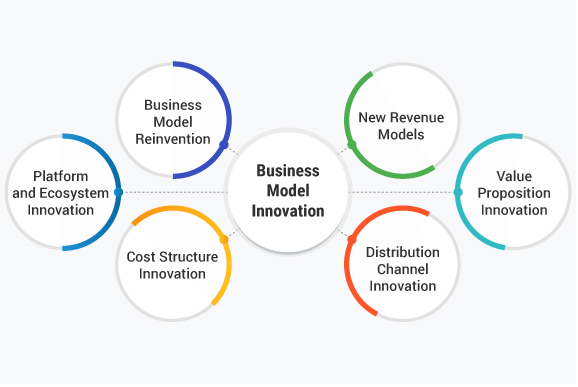
Business model transformation refers to the process of altering the fundamental way a company operates and delivers value to customers, in order to improve its performance, competitiveness and adapt to changing market conditions. In order to develop a new and more successful business model, it entails reevaluating the organization's strategy, operations, finances, and organizational structure. The objective is to enhance the whole value the business offers to its stakeholders and clients while generating new revenue streams and cutting expenses.
The business model describes the fundamental reasoning behind how an organization functions, makes money, and expands over time. It is a vital component of a business's overall strategy and determines whether it succeeds or fails. Through the introduction of novel and inventive business concepts, new enterprises frequently aim to upend established markets. In ways that traditional firms cannot, these new models may contact customers in new ways, provide distinctive value propositions, and make money.
A business may decide to undergo a business model transformation for a variety of reasons, including:
Business Performance Evaluation
A variety of indicators, including those that gauge productivity, profitability, leadership, and performance, can be used to assess how well a firm is performing. Benchmarking and financial performance analyses are two efficient methods of performance measurement. In business, luck is rarely the determining factor. Rather, it necessitates wise strategic choices based on a thorough comprehension of both your company's performance and that of the larger market. These six steps cover all the elements for a simple, yet frequent, approach to evaluating business performance evaluation.
Our performance evaluation metrics are as given below:
Organisational Culture Audits
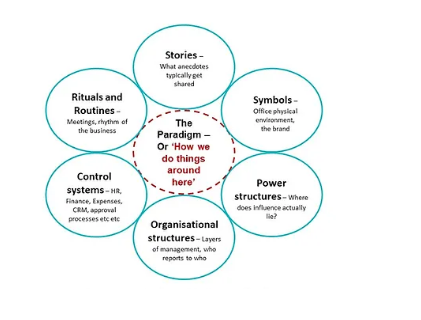
A culture audit is a comprehensive evaluation of an organization's values, work environment, policies, practices, and attitudes. The evaluative process seeks to understand an organization's culture and provide insight into potential areas of concern that may require attention or reform.
Leaders in companies are frequently oblivious to the reasons behind low productivity or significant staff turnover. Even though the causes are frequently complex, an internal audit of workplace culture can identify problems that employees are facing and help to enhance employee happiness and engagement. Businesses, academic institutions, and organizations are discovering the advantages of cultural audits in an era where accountability and transparency have become crucial corporate signals. Positive changes have been observed, as evidenced by recent publications like the PWC Global Economic Crime and Fraud Survey 2022. Years of battling financial crime with rules, training, oversight, and other internal controls have significantly reduced internally motivated misbehavior.
Some of the benefits of having organisational culture audits are as follows.
Early warning: A culture audit allows organizations to detect problems early on, enabling them to address issues before they intensify. Good culture auditing tools allow you to detect trends in employee sentiment. They allow insights into a specific department or office location and even highlight issues with various management levels.
Increased trust: By being proactive and transparent in your company's corporate culture, you are signaling to customers, clients, investors and employees your willingness to create a safer workplace environment where misconduct is not tolerated.
Regulatory compliance: A company culture audit can help ensure an effective compliance program is in place to meet regulatory standards.
Risk minimisation: Through standard reporting and robust analytics, culture audits help identify potential risk areas, reducing financial and reputational losses.
Legal protection: Culture audits can also help prevent legal action against a company by identifying and addressing potential liabilities.
Scoping of Organizational Capabilities and Resources
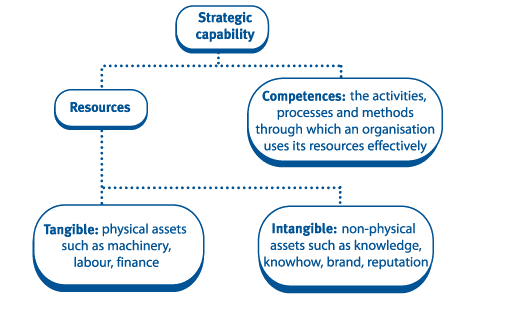
Capabilities are what an organization can accomplish, whereas resources are what it owns. More precisely, skills relate to the organization's capacity to combine, organize, or utilize resources in any way that adds value and, ideally, gives it an advantage over rivals. Businesses create innovations in the form of new goods, services, or procedures by leveraging their resources and competencies. innovative aptitude is the ability to replicate innovative achievement, which some organizations are more successful at than others.
It is important to understand that no strategy can be developed which is not aligned to the organisation’s resources and capabilities. Understanding what needs to be achieved leads to an evaluation of the resources and capabilities of the same organisation. This often lead to the development of or acquisition of new resources which enhance the capabilities of the organisation.
NB: For every move that an organisation seeks to take, there are certain sets of resources and capabilities and resources that are required. What makes or breaks a strategy are resources and capabilities. We help organisations understand the resource and capabilities that are crucial for every strategic goal.
Strategy Development and Execution
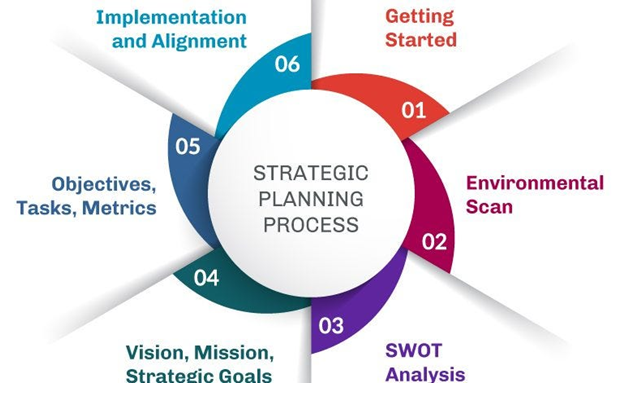
Organizations utilize the process of strategic development to examine their internal and external surroundings and identify the resources and actions necessary to maintain their competitiveness and success. The process of developing a company's strategy is its roadmap to steady growth. This method provides a list of specifics together with goals that explain how your team intends to reach each one. To make sure that everyone on the team is working toward the same objectives, you should include the company's vision and mission in your plan. Coming up with fresh ideas may need extensive research, which could take several months to complete.
It is frequently vital to reassess your approaches to products and services when managing a business. The expansion of your company, regardless of size, will depend on your ability to keep abreast of industry developments and the offerings of your rivals. You will also want to assess the present health of your firm, how it’s grown and how well it sticks to its mission statement. After gathering all of this data, develop a plan for future expansion to guarantee that your company reaches its maximum potential.
Agile strategies enable you to quickly adjust to changing conditions, grab new opportunities, and stay relevant in a fast-paced market where consumer preferences are subject to whims. It bobs and weaves like a (approachable yet sword-wielding) monster slayer dressed in leather pants.